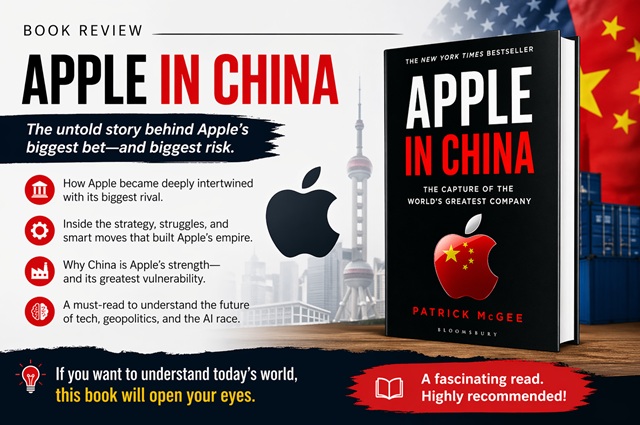
I happened to read Apple in China during a time when global tensions—especially between the U.S., Israel, and Iran—were dominating the headlines. The war is still ongoing, but this book added a completely new layer to how I understand today’s geopolitical and technology landscape.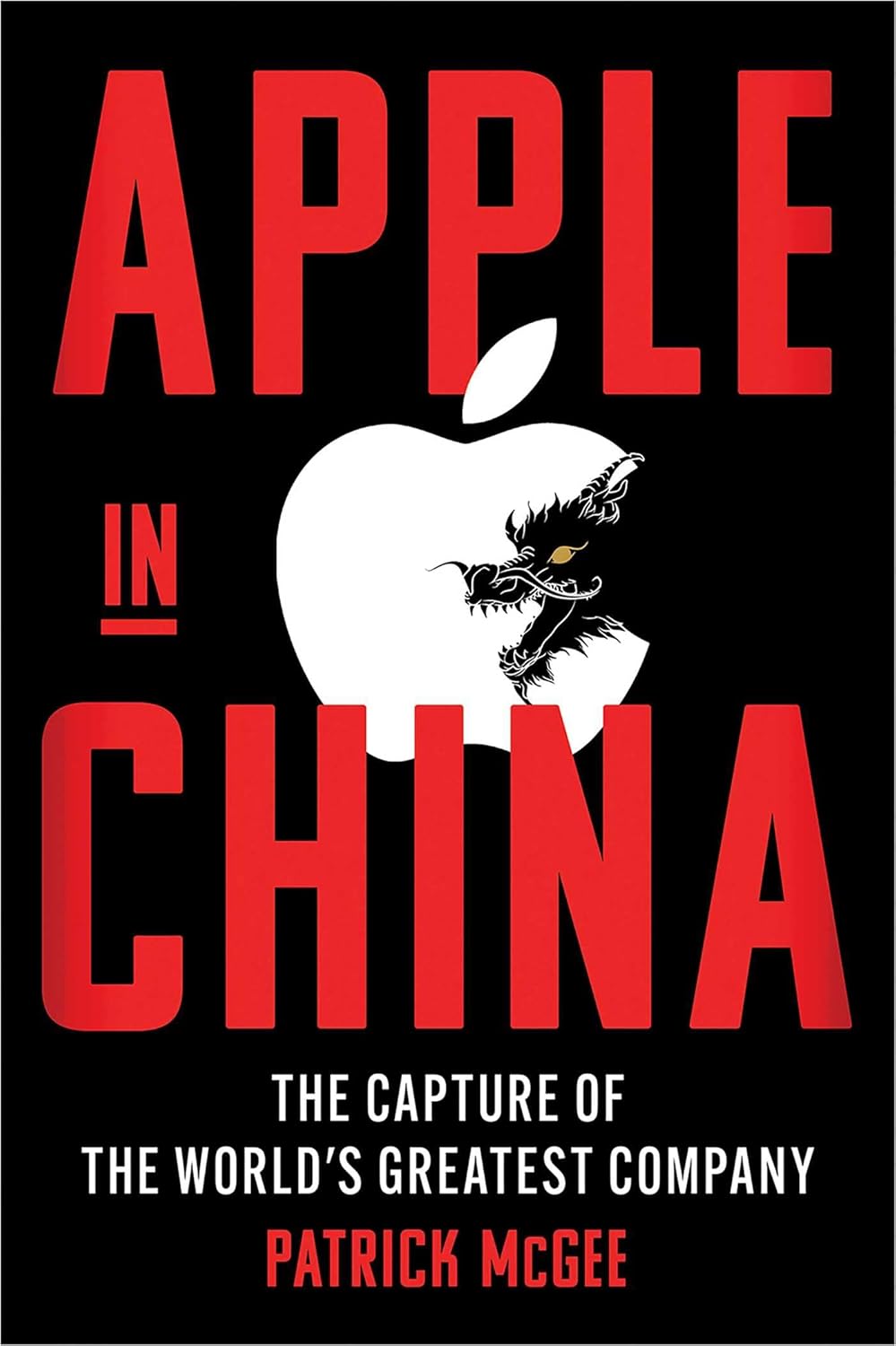
After reading books like Chip War and House of Huawei, this one felt like the missing piece. It connects the dots between technology, supply chains, and global power dynamics. At its core, it tells a fascinating story: how a U.S. company like Apple became deeply intertwined with China—a country often seen as its biggest strategic rival.
One thing that stands out is why Apple remains one of the most valuable companies in the world. The book doesn’t glorify success blindly—it shows the struggles, the near-failures, and the repeated comebacks. You realize that sustaining such a company requires an intense mix of consistency, ambition, discipline, and long-term thinking.
There’s also a strong focus on Apple’s culture. The internal drive to “get things done the right way” is almost obsessive. Turning Jony Ive’s designs into real, mass-produced products was not just about creativity—it was about execution at scale. Working with contract manufacturers, refining processes, and pushing for perfection was incredibly hard. The book captures this journey in a very grounded way.
Another interesting takeaway is how Apple has set the benchmark for the entire digital device industry. People who have worked at Apple often carry that mindset elsewhere—structured thinking, attention to detail, and a deep understanding of innovation processes.
But then comes the biggest tension: Apple’s deep dependence on China. This is not just a business choice—it’s a strategic vulnerability. The book makes you think about how difficult it will be for Apple to shift manufacturing to countries like India or Vietnam. It’s not impossible, but it’s not quick either. The next 10 years are going to be critical, especially with rising geopolitical tensions and the parallel race in AI that could shape the next century.
What makes the book even more engaging are the real stories—almost unbelievable at times. From negotiating deals on Apple’s terms to establishing a retail presence in China, the ingenuity and boldness of Apple employees really stand out. The early days, in particular, are gripping and full of smart, unconventional decisions.
Overall, this is a brilliantly written book Apple in China. Credit goes to Patrick McGee for bringing together the story of Apple and China in such a compelling way. If you’re interested in technology, global strategy, or just understanding how the modern world really works behind the scenes—this book is absolutely worth your time.





Be First to Comment