I picked up The Thinking Machine right after finishing Chip War by Chris Miller, and the timing couldn’t have been better. Chip War gave me the right background on semiconductors and geopolitics, which made this book even more meaningful. Coincidentally, around the same time, NVIDIA became the world’s most valuable company—firmly at the center of the AI revolution with its data center chips.
I work at ACL Digital, a software and engineering services company, and earlier in my career I worked with firms focused on IT and telecom infrastructure. Like many others, I knew NVIDIA first as a gaming company. In the 2000s, its GeForce GPUs were famous for boosting gaming performance. What Stephen Witt does beautifully in this book is explain how NVIDIA slowly and deliberately expanded beyond gaming—without ever abandoning it.
One of the most engaging parts of the book is the story of AlexNet, built by Alex Krizhevsky, Ilya Sutskever, and Geoffrey Hinton. Witt explains this breakthrough in a very clear and inspiring way. Their work showed how neural networks, when combined with GPUs, could outperform traditional approaches—and this discovery changed the direction of AI research forever.
The book also talks about ImageNet, led by Fei-Fei Li, and how massive image datasets were processed using NVIDIA GPUs. At the time, NVIDIA itself was searching for new use cases beyond gaming. These researchers unknowingly helped create the future NVIDIA we see today. Credit also goes to NVIDIA’s leadership for staying patient and committed to CUDA, even when its value wasn’t obvious to everyone. Jensen Huang and his team truly deserve recognition for that long-term vision.
A key idea Stephen Witt highlights is that today’s AI boom is the result of two parallel evolutions coming together: neural networks and parallel computing. Simply put, modern AI works because neural networks run extremely well on parallel GPU architectures.

We’ve all read stories about the rise of Apple, Microsoft, Google, and Amazon—but NVIDIA’s story feels different. Jensen Huang didn’t set out to become one of the most influential CEOs in tech history. He “accidentally” became a CEO of a small startup, but his persistence, problem-solving mindset, and willingness to try multiple approaches created something historic. In many ways, NVIDIA has laid the foundation for how AI will shape the next several decades—possibly the next 100 years.
The book doesn’t shy away from Jensen’s tough leadership style. He is portrayed as aggressive, demanding, and sometimes impatient—even the author experiences this firsthand. But Witt presents this in a balanced way. Instead of judging it, he shows Jensen as a very human leader—unorthodox, intense, but deeply driven by vision. That intensity, in many ways, helped NVIDIA disrupt and lead the AI wave.
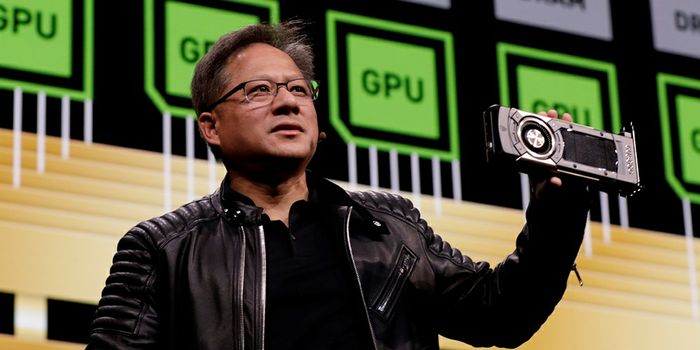
Overall, The Thinking Machine is an excellent read for anyone who wants to understand NVIDIA’s journey, the real forces behind the AI revolution, and the unique leadership lessons from one of the longest-serving CEOs in the technology industry.


Be First to Comment