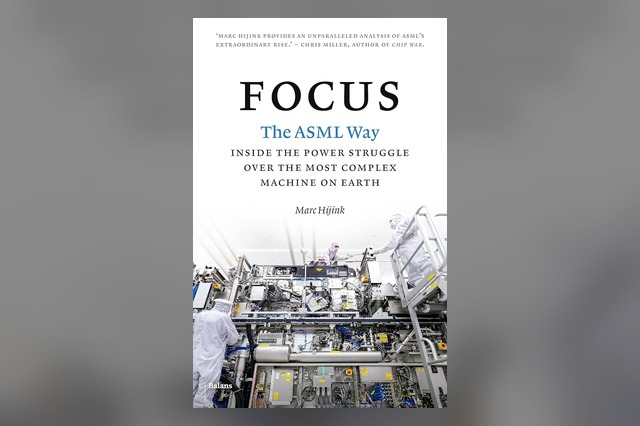
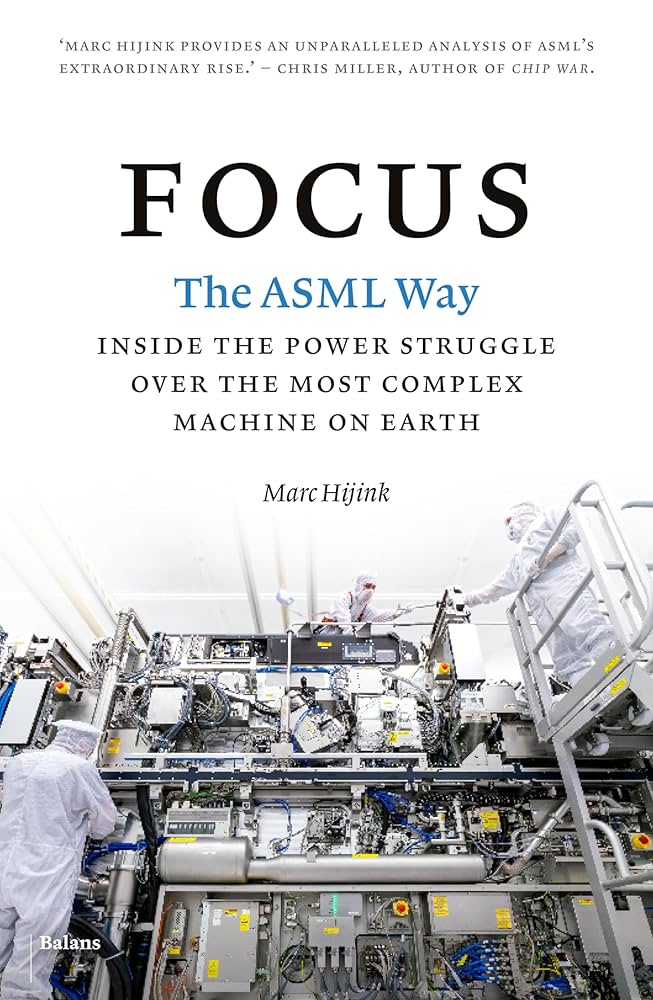
 ASML is a company name most people have never heard of. But it is almost certain that the chips inside your smartphone were made using a lithography machine built by ASML. No modern chip is made without their machines.
That is the reason I wanted to read this book, Focus: The ASML Way. Because of the impact ASML has on the world. The EUV lithography machines and other systems it produces are some of the most complex machines on earth. It takes three to seven Boeing 747 cargo planes (or similar wide-body jets) just to transport one advanced ASML machine, depending on the model. These machines make chips with nanoscale features, enabling 2nm, 3nm, 5nm, and 7nm chips. These tiny sizes decide how small a transistor can be, so billions of them can fit on one chip. This is what makes devices smaller, cheaper, and more power-efficient.
The book tells the whole story, starting from ASML’s foundation. ASML was a neglected, underfunded spin-off from Philips in 1984, dismissed by everyone next to giants like Nikon and Canon. Few in the industry believed it could succeed.
ASML also got into a battle with Nikon over patents, with Nikon suing ASML over claimed infringements, sparking a long legal war. So ASML was fighting on two fronts, technology and legal, before it ever became a monopoly.
In its early days, ASML built a close partnership with the German company Zeiss, who makes optics and optoelectronics. ASML also worked closely with Cymer, who makes the laser-produced plasma light source, just as critical as Zeiss’s mirrors. Later, ASML acquired Cymer, but Zeiss chose to stay independent. The story of how ASML tried to acquire Mapper, a company working on “maskless” electron-beam lithography, is also an intriguing part of the book, tied closely to geopolitics.
But there are two stories in the book that stand out the most.
The first is how, when ASML was in financial trouble, chip makers like TSMC, Intel, and Samsung didn’t just buy ASML’s machines. They invested directly into ASML’s R&D to keep EUV alive. Later, Samsung pushed ASML to build an even more advanced system, what became known as High-NA, made to produce the smallest chips yet. ASML delivered it almost seven years after its original promised date. But what looked impossible was finally achieved.
The second story is about the chemistry between Martin van den Brink and Peter Wennink, and it is truly inspiring. Martin is the techie, almost child-like in his focus, always lost in his own world of engineering problems. Peter was the non-technical, finance-minded one, who handled legal matters, corporate relationships, and dealings with governments and partners. Together, they made a balance that worked.
As the world realized how important ASML had become to global technology, the U.S. used its diplomatic pressure on the Hague to control ASML, pushing the Dutch government to stop ASML from selling its most advanced technology to China. The book explains the U.S.’s reasoning in detail, showing how being the leader in this field put ASML right in the middle of global geopolitics.
Overall, the book tells the full story of ASML and gives hints about where it’s going. Geopolitics is the story ASML is living through right now. The book’s final section also touches on future plans, like the Hyper-NA systems.
And just recently, that future started showing up in real life. Elon Musk addressed ASML at its annual conference about TeraFab, a massive chip manufacturing project backed by SpaceX, Tesla, and xAI, planned for Texas, with a budget that could reach over $100 billion. ASML’s machines will be essential to it. It’s one more sign of how important ASML’s machines are, and will keep being, for the world ahead.
I recommend this book to anyone who loves technology, works in the industry, or simply wants to understand the geopolitics shaping the world’s most crucial technologies today. Focus: The ASML Way is not just a story about machines, it’s a story about who controls the future.





Be First to Comment