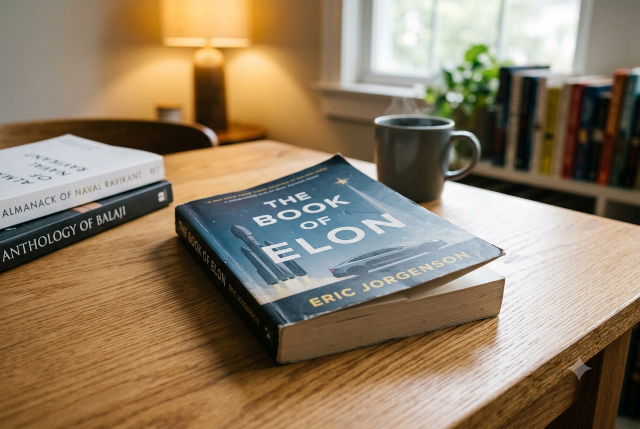
I finished The Book of Elon faster than any book I can remember reading. That’s not because it’s short — it isn’t. It’s because Eric Jorgenson has built something unusual here: a book that isn’t really “telling a story” in the traditional sense, and yet never once drags.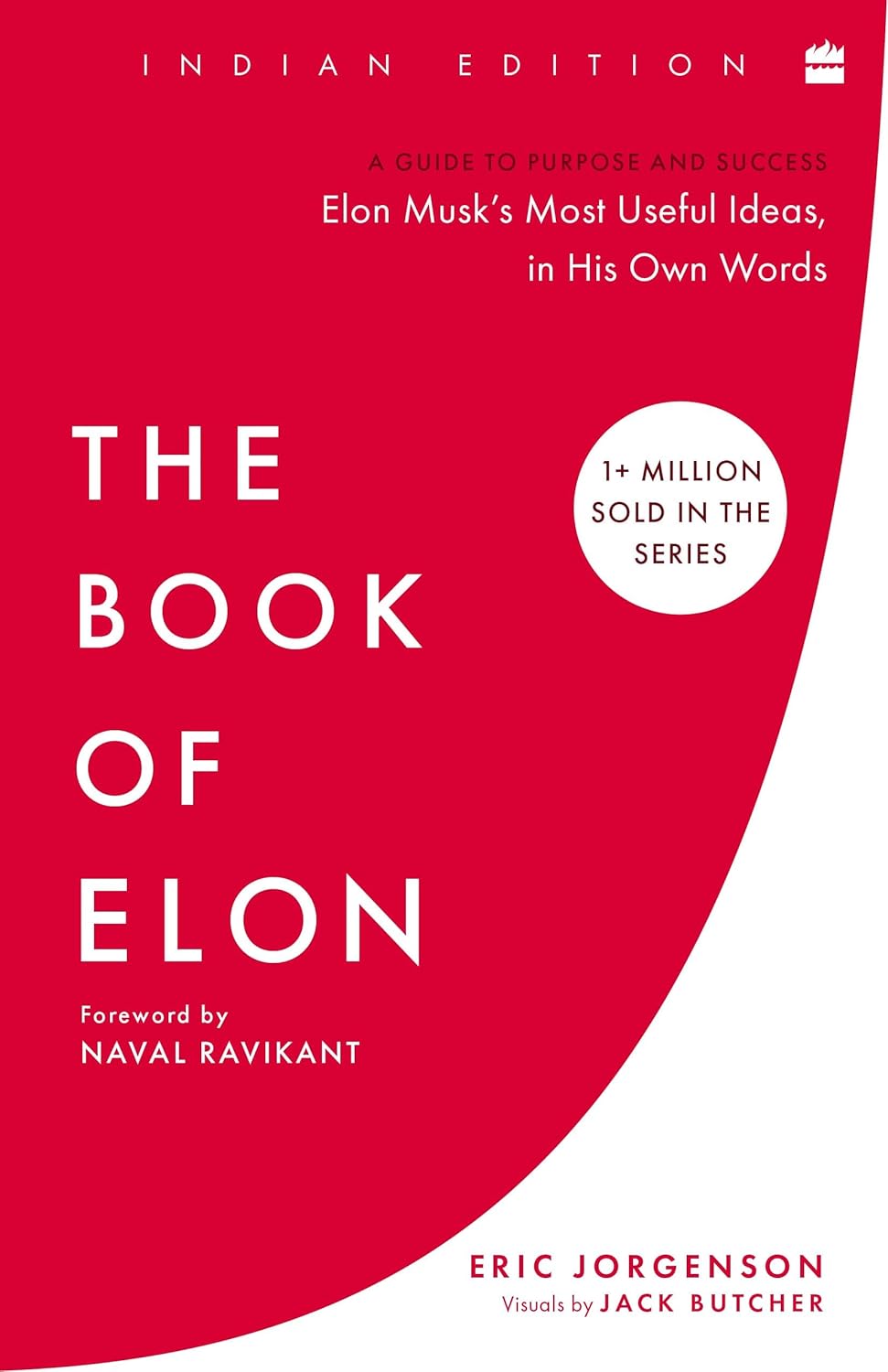
Most narrative-style books lose me somewhere in the middle, buried under details I never asked for. The Book of Elon avoids that trap entirely. It doesn’t wander. It stays locked onto a single thread: how Elon Musk actually thinks. Not what he did on a particular Tuesday in 2008, but the mental models running underneath all of it. By the time you close the book, you feel like you’ve been handed a direct transcript of his thought process, distilled and organized rather than dramatized.
I know there are other books that cover the same ground — Walter Isaacson’s Elon Musk and The Curious Mind of Elon Musk among them. I haven’t read either yet, but I’d guess they take a more conventional biographical route: chronology, anecdotes, the arc of a life. That’s a valid way to understand someone. Jorgenson chooses a different one entirely, and it’s worth talking about why it works.
Why the format works
Here’s the thing that struck me most: the structure of the book mirrors the subject of the book. Musk is famous for stripping problems down to first principles — cutting away everything unnecessary until only the essential mechanism remains. Jorgenson does the same thing to Musk’s own ideas. He doesn’t ask the reader to wade through psychological interpretation or narrative scaffolding to arrive at understanding. He removes that friction. The frameworks are presented plainly, almost as source material, and the reader is trusted to do the thinking rather than being walked through it paragraph by paragraph.
That’s a harder thing to pull off than it sounds. Most books about “how a great mind thinks” end up telling you what to conclude. This one hands you the raw material and gets out of the way.
What I’m taking from it
By the end, you come away with a working map of how Musk approaches problems — not a highlight reel of his achievements, but the actual reasoning underneath them. That’s a different kind of takeaway than most biographies leave you with, and I think it’s the more useful one if what you’re after is a way of thinking rather than a collection of facts.
Jorgenson has also written similar books on Balaji Srinivasan and Naval Ravikant, and after this one, I’m genuinely curious to pick those up too — if they follow the same approach, they’re likely worth the time regardless of how much you already know about the subject.
If you’re someone trying to figure out your own path — career, projects, or just how to think more clearly about hard problems — The Book of Elon is less a biography and more a toolkit. That, I think, is exactly what makes it worth the short time it takes to read.
Get the book from here




Be First to Comment